


You’ve probably stood in a skincare aisle, reading product labels that promise clear skin, only to find that nothing works quite right. Or perhaps you’ve sat across from a dermatologist who struggled to identify hyperpigmentation on your darker skin tone, prescribing treatments meant for someone else’s complexion. Maybe you’ve watched beauty tech demos that scan faces flawlessly on lighter skin but glitch and fail when turned toward yours. If any of this sounds familiar, you’ve experienced what billions of melanin-rich people navigate daily in a system that wasn’t built to see them.
This isn’t coincidence. It’s infrastructure designed around one standard skin, leaving everyone else as afterthoughts.
The numbers tell a stark story. The global skincare industry is worth over $180 billion, yet products and technologies for melanin-rich skin remain dramatically underserved. Dermatology AI algorithms, the gatekeepers of modern diagnosis and care, are predominantly trained on images of lighter skin. The result? State-of-the-art AI models show 18-21% lower accuracy rates when analyzing darker skin tones compared to lighter skin tones for melanoma and skin cancer detection.. When a melanoma on Black skin gets misidentified as a benign patch because the algorithm learned from white skin, the consequences aren’t abstract. They’re deadly. Black patients are diagnosed with melanoma at later stages and have significantly lower five-year survival rates than their white counterparts. This is what happens when power decides whose skin is “standard” and whose is niche.
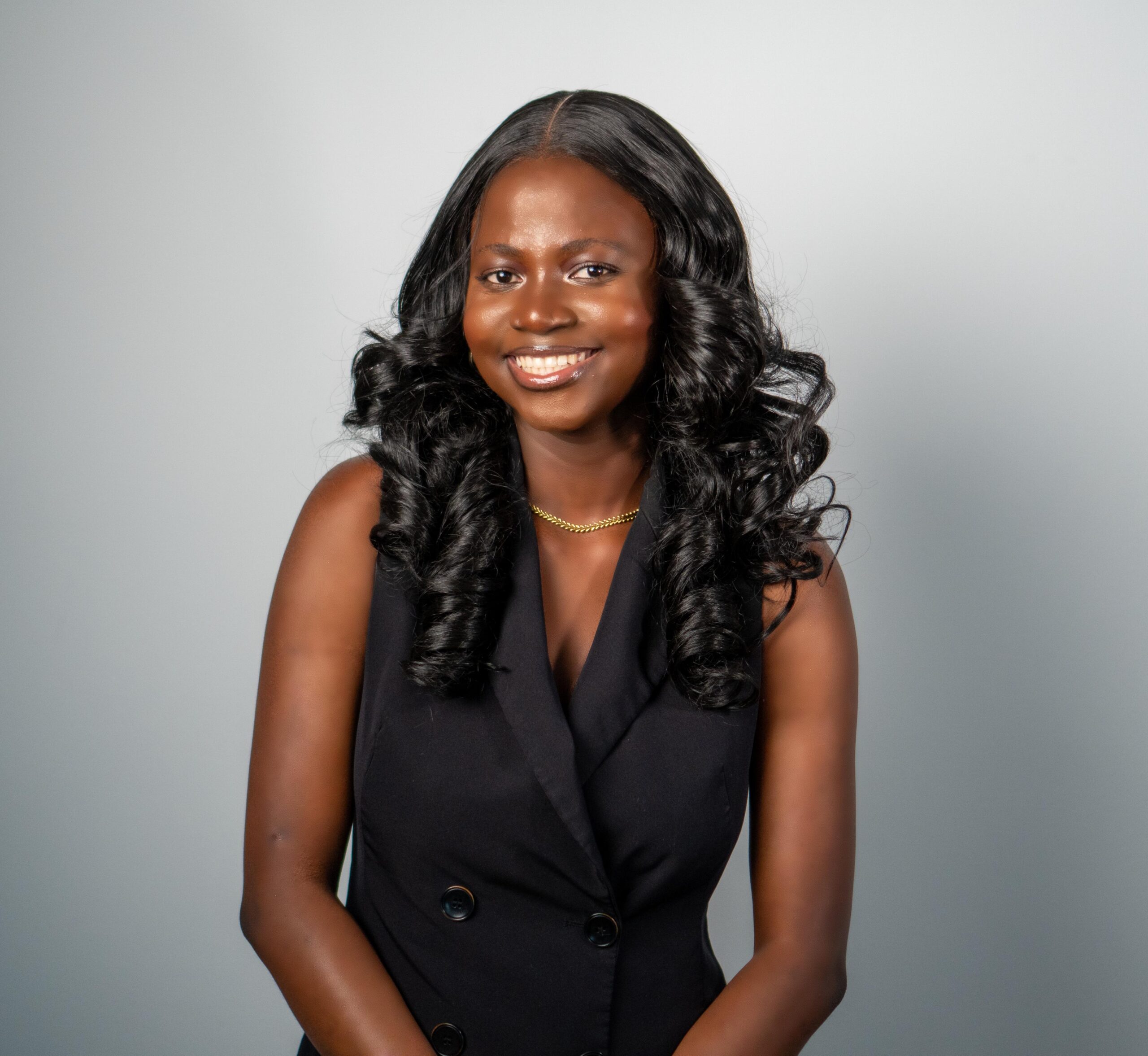
Precious knows this truth intimately. For years, she struggled with acne, hyperpigmentation, and scarring. Every product recommended to her made her skin worse. Then came the turning point.
“The day I realized that this wasn’t ‘my fault,’ but a systemic problem rooted in data bias and exclusion, something shifted,” she recalls. “I didn’t want to complain about the problem anymore. I wanted to fix the infrastructure behind it.”
That infrastructure, or the glaring absence of it, is what Precious is building with Beeva AI, a technology company creating the world’s largest ethically sourced image dataset and diagnostic tools specifically optimized for melanin-rich skin. But to call Beeva AI a skincare app misses the point entirely. This is health equity work, challenging who gets counted in global health data and who controls the systems that determine care.
The Education of a Founder
Precious’s path to Beeva AI began in an unexpected place. At Flutterwave, one of Africa’s leading fintech companies, she managed B2B/B2C payment products across multiple markets. There, she witnessed technology’s double edge. Payment systems could inadvertently lock out small businesses, rural users, or people without formal banking, not because these users lacked capability, but because the technology wasn’t designed with them in mind. She also saw how intentionally inclusive design could flip these imbalances entirely.
“Working in fintech taught me that technology is never neutral,” Precious explains. “It either opens doors or reinforces the walls that were already there.”
This lesson became Beeva AI’s founding principle. Who you center during design determines who gets left behind. Most skincare apps claim to be “for everyone” while designing for lighter skin first, treating darker tones as variations to accommodate later. Beeva AI rejects this model entirely.
“We don’t want to retrofit melanin skin into AI systems built for white skin,” Precious says firmly. “We’re building from our community outward, not the other way around.”
This explicit centering of melanin-rich skin is a political choice, and it has drawn predictable pushback. Some investors and advisors have asked why she’s “limiting” her market. Her response cuts through the false universalism that pervades tech.
“Centering melanin-rich skin is not limiting, it is liberating,” she insists. “When you don’t name your community, you default to the status quo, which is Eurocentric. Naming our focus is a political and ethical choice.”
The Ethics of Seeing
The politics of data collection in AI isn’t an academic exercise for Precious. It’s the foundation everything else rests on. Black and brown communities carry well-founded mistrust of health technology, histories stretching from Tuskegee to Henrietta Lacks to countless unnamed exploitations. Many tech companies extract data from African and diaspora communities without reciprocal benefit or ownership, treating people as raw material for algorithms that will never serve them.
Beeva AI is charting different terrain. The company collects data directly from people who choose to participate, running university activations across Ghana where students scan with Beeva AI and give explicit consent for their images to train the models. They’re building partnerships with dermatology clinics and hospitals, centered on transparency and shared benefit.
“To me, ethical data collection means people know exactly what we’re collecting, they know how it will be used, their participation is voluntary, and they’re part of shaping the outcomes,” Precious explains. “Communities aren’t ‘data sources’, they are co-creators of healthier, fairer technology that represents their identity.”
This approach rejects extraction entirely. No swooping in, taking data, and disappearing. No research subjects, only partners. The goal is ensuring African and diaspora communities actually see the benefits in their care, confidence, and representation. It’s a radical repositioning of who has agency in technological development.
Building What the System Won’t
When Precious describes Beeva as building “skin data infrastructure for global health,” she’s naming precisely what’s absent. Infrastructure means the systems everyone depends on but rarely sees: the pipelines, datasets, APIs, insights, and models that power accurate diagnosis and personalized care.
“Right now, this infrastructure doesn’t exist for melanin-rich skin,” she states plainly. “Historically, it has been ignored, underfunded, and underrepresented.”
Beeva AI is constructing what healthcare systems and beauty corporations have refused to build: ethically sourced image datasets for darker skin, AI models specifically optimized for melanin, APIs that clinics and hospitals can integrate, and insights that help clinicians make decisions with confidence. This is infrastructure as politics, determining whose skin matters in the architecture of modern medicine.
The stakes extend far beyond cosmetics. Conditions like post-inflammatory hyperpigmentation, keloid scarring, and melanoma disproportionately affect people of color and carry profound impacts on mental health, employment, relationships, and daily life. When clinicians lack tools calibrated for melanin-rich skin, these conditions go misdiagnosed or untreated, compounding existing health disparities.
“Anyone who has ever battled hyperpigmentation, keloids, or acne on darker skin knows it’s not ‘just cosmetic,'” Precious says. “It affects self-esteem, job interviews, relationships, and mental health. Beeva AI is not a beauty toy, it’s a health equity tool.”
Navigating Capital and Geography
Operating between Nigeria, Ghana, and Berlin, Precious embodies a particular tension facing African founders. Location determines access to funding, networks, laboratories, regulatory systems, and technical talent. Being an African founder building for African and diaspora communities while operating in European innovation ecosystems means navigating two worlds, one where capital is abundant and one where problems are urgent.
“I’m building for home from the heart of Europe,” Precious reflects. “That dual perspective is one of my biggest advantages.”
But accessing European capital as a Black woman founder remains brutal. Black founders receive less than 1% of global venture capital. Black women founders receive even less. Early in Beeva AI’s journey, investors dismissed the idea as “just beauty,” failing to grasp the health implications of biased AI. As a young Black woman founder, Precious has had to explain her lived experience in rooms where no one has experienced what she’s describing.
“Each time I pitch, I remind myself that if the standard conditions don’t favor me, I will change the conditions,” she says. “Funding Beeva AI is not charity, it’s backing the future of equitable healthcare.”
Building Beyond Herself
Precious’s commitment to community predates Beeva AI. She founded GirlsWhoLoveGrowth, mentors women in product management through organizations like Tech4Dev and SheCodesAfrica, and volunteers at events like Black Girls Tech Summit. For her, individual success divorced from collective uplift is meaningless.
“Community is my backbone,” she says. “When I mentor women through these communities, I see visible, undeniable growth in confidence, skills, and ambition. The same values guide Beeva AI. We’re building a company where people grow, learn, and feel seen. Our mission is bigger than skin analysis, it’s about expanding what opportunities look like for people of color.”
This vision aligns precisely with Global Health Otherwise’s imperative to reject business as usual and center justice in global health. When people with melanin-rich skin see themselves accurately represented in technology, power shifts.
“Analyzing a selfie seems small, but it disrupts decades of exclusion,” Precious observes. “It says our bodies matter, our data matters, and our wellness matters. That is decolonization, reclaiming space in systems that historically erased us.”
For sustainable transformation, Precious calls for policy intervention. Standards requiring AI validation on diverse skin tones. Public funding for African health data infrastructure. Cross-border research collaborations. Stronger regulations on biased models. Without institutional change, individual startups shoulder burdens that should be systemic responsibilities.
Success for Precious isn’t measured solely in revenue or valuation. It’s Beeva AI’s technology integrated into hospitals and dermatology clinics worldwide, making accurate analysis available to every melanin-rich person, everywhere.
“Success for me is when people with darker skin tones no longer have to wonder whether technology can see them.”
She leaves us with a final framing that refuses to diminish the work.
“Beeva AI is bigger than a startup. It’s a movement. It’s a statement that people of color deserve precision, accuracy, and dignity in healthcare. And it’s a reminder that young African founders can build globally relevant companies even when the world underestimates them. We’re just getting started.”
The infrastructure is being built. The question now is whether existing systems are ready to make space for it.
This feature is part of Health Politics and Diplomacy, where we critically unpack how political interests and diplomatic forces shape global health agendas, equity, and outcomes. To decolonize global health effectively, we must continuously question knowledge, expertise, methods, power, agenda. For whom, by whom, with whom.