


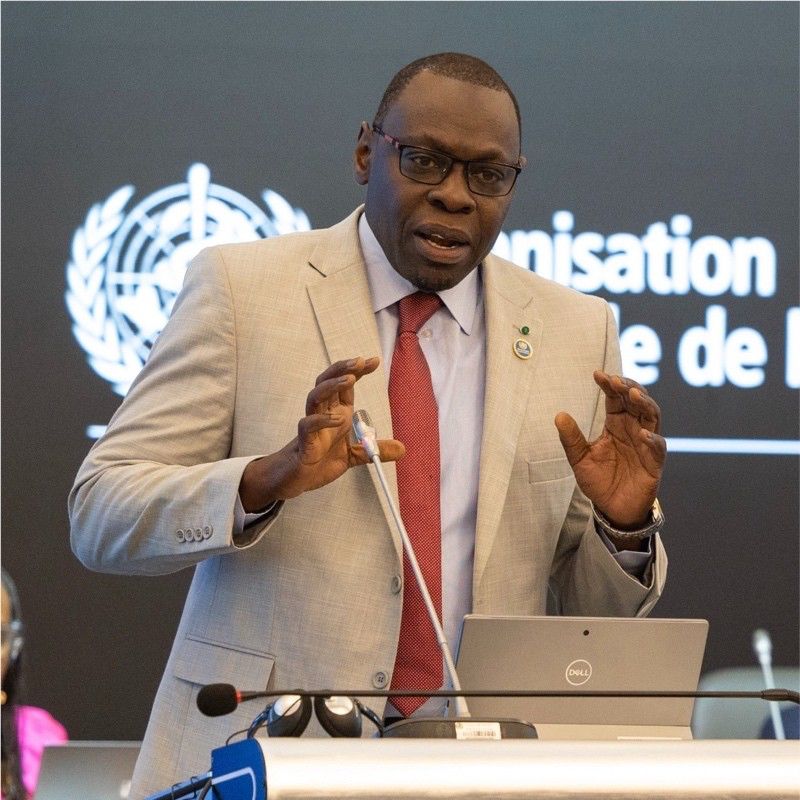
The phone rang at 3 AM in November 2014. On the other end was the United Nations Secretary-General with an impossible mission. Ebola was raging across West Africa, killing thousands, and threatening to spiral into a global catastrophe. The disease had just crossed into Mali, and the world needed someone who could stop it cold.
They called Dr. Ibrahima Socé Fall.
Within hours, this Senegalese military doctor turned global health warrior was on a plane to Mali, carrying the weight of humanity on his shoulders. What happened next would cement his reputation as one of the most formidable disease fighters of our generation.
The Making of a Medical Commander
Long before the world knew his name, Ibrahima Socé Fall was forged in the crucible of military medicine. Born in 1966 in Senegal, he didn’t follow the typical path of a doctor seeking comfort and prestige. Instead, he chose the hardest road imaginable.
Picture a young military physician in the early 1990s, stationed in remote outposts like Ziguinchor, treating wounded soldiers while bombs exploded nearby. This wasn’t a comfortable clinic in Dakar. This was the front line, where Dr. Fall learned that medicine wasn’t just about individual patients but about survival itself.
The experience carved something deep into his soul. He saw how diseases could destroy entire communities faster than any weapon. While other doctors treated symptoms, Fall began thinking about systems, about prevention, about stopping diseases before they could kill.
By his thirties, he was already commanding the planning and operations division in Senegal’s military health department while simultaneously teaching at the prestigious University Cheikh Anta Diop. He was building the skills that would one day save millions of lives.
The Call to Geneva
In 2004, the World Health Organization came calling. They needed someone who understood both medicine and warfare, someone who could think strategically about humanity’s greatest health threats. Dr. Fall answered that call, beginning a 21-year journey that would take him to the highest levels of global health leadership.
His first assignment was coordinating malaria teams across Africa. Malaria was killing a child every two minutes, mostly in the poorest communities. But Fall saw opportunity where others saw only tragedy. He became WHO’s global focal point for malaria strategic planning, orchestrating campaigns that would eventually save hundreds of thousands of lives.
From 2007 to 2012, he chaired the Roll Back Malaria strategic planning workstream, transforming how the world fought one of its oldest killers. His strategies didn’t just treat malaria; they systematically dismantled its ability to spread.
The Ebola Test
Then came the ultimate test. In 2014, Ebola exploded across West Africa with unprecedented fury. The disease was spreading faster than anyone had ever seen, jumping from Guinea to Liberia to Sierra Leone, leaving a trail of death and terror.
When Ebola reached Mali, the UN Secretary-General made an extraordinary decision. He appointed Dr. Fall as Head of the United Nations Mission for Ebola Emergency Response (UNMEER), giving him unprecedented authority to coordinate the response of multiple nations and organizations.
What Fall accomplished in Mali became legendary in global health circles. Working with international partners, he created a response system so effective that Ebola transmission in Mali was completely interrupted. While the disease continued ravaging neighboring countries, Mali stood as an island of hope in a sea of despair.
His success in Mali wasn’t luck. It was the result of decades of preparation, of understanding that disease outbreaks are wars that require military precision combined with medical expertise. Fall had both.
Rising to the Summit
After his triumph in Mali, Dr. Fall’s ascent through WHO’s ranks was inevitable. He became Regional Emergency Director for Africa, then Assistant Director-General for Emergency Response at the United Nations Assistant Secretary-General level. At this pinnacle of global health leadership, he was responsible for coordinating responses to health emergencies affecting billions of people.
In 2022, he took on perhaps his most challenging role yet as Director of the Global WHO Neglected Tropical Diseases (NTD) program. These diseases affect over one billion of the world’s poorest people, but they’re called “neglected” because the wealthy nations that fund global health initiatives often ignore them.
Under Fall’s leadership, remarkable progress was achieved. In June 2025, just before he left WHO, his greatest personal victory was realized. Senegal eliminated trachoma as a public health problem, becoming one of only a handful of countries worldwide to completely eradicate this blinding disease.
“Cela implique plusieurs missions: la recherche pour traduire les connaissances en politique, stratégies et interventions de santé publique en Afrique afin d’améliorer la performance des systèmes de surveillance, de détection et de diagnostic des maladies, mais aussi la qualité des soins préventifs, promotionnels et curatifs pour aboutir à une réduction drastique des cas de décès évitables” he explained his mission to translate research into policies that save lives.
The Scholar-Warrior
What sets Dr. Fall apart from other global health leaders is his unique combination of battlefield experience and academic excellence. He doesn’t just fight diseases; he studies them with the intensity of a scholar and the precision of a military strategist.
His academic credentials are staggering. He holds a Doctorate in Medicine from UCAD, a PhD in Epidemiology and International Health from both Tulane University and the University Cheikh Anta Diop, a Master’s in International Development, and became a Fellow of the Faculty of Public Health at the Royal College of Physicians in the United Kingdom.
But his true legacy lies in his research output. Dr. Fall has published over 200 articles in peer-reviewed journals, contributing groundbreaking insights into disease control and emergency response. One of his significant publications,“Ebola virus disease outbreak in Liberia: application of lessons learnt to disease surveillance and control,” demonstrates his commitment to learning from each crisis to prevent future catastrophes.
He also created and edited over 500 articles for WHO’s weekly health emergency bulletin, a publication that helps countries worldwide prepare for and respond to health emergencies. This bulletin became an essential tool for global health security under his leadership.
The Shocking Return
In July 2025, Dr. Fall made a decision that stunned the global health community. At the peak of his career, with six years remaining on his WHO contract, he announced he was leaving to become CEO of Institut Pasteur de Dakar.
Why would someone at the summit of global power return home?
“Nous avons une opportunité unique d’amener l’Ipd à la performance la plus élevée possible, sur le plan mondial, par ses standards et son impact et en faire un centre d’excellence” he declared, explaining his vision to transform the institute into a world-class center of excellence.
This wasn’t a retreat; it was a calculated strategic move. Fall recognized that Africa’s health independence required African leadership, African research, and African solutions. Institut Pasteur de Dakar represented the perfect platform to build that future.
Building Africa’s Health Future
Under Dr. Fall’s leadership, Institut Pasteur de Dakar is becoming the headquarters of Africa’s health revolution. The institute is expanding vaccine production capabilities, ensuring that Africa can respond to future pandemics without waiting for help from other continents.
In September 2025, he launched the Certificate in Bioproduction program at Rose Dieng France-Senegal University, training 30 students to become the next generation of African vaccine and medicine producers. These young scientists will help Africa achieve what Fall calls “health sovereignty.”
His partnerships extend beyond education. Working with organizations like the Mastercard Foundation, he’s building a network of African health institutions that can research, develop, and manufacture treatments for diseases that primarily affect African populations.
The Weight of Legacy
Today, at 59, Dr. Ibrahima Socé Fall carries multiple honors. He is a Commander of Senegal’s National Lion Order and a Fellow of the Royal College of Physicians in the United Kingdom. But his true awards are measured in lives saved.
The malaria programs he designed have prevented countless childhood deaths. His emergency response strategies during disease outbreaks have stopped pandemics before they could spread globally. His research has equipped other scientists with tools to fight diseases more effectively.
His work on neglected tropical diseases brought hope to over one billion of the world’s poorest people. Under his leadership, multiple countries eliminated diseases that had plagued humanity for centuries.
The Vision Ahead
Dr. Fall’s current mission at Institut Pasteur de Dakar represents more than career advancement. It’s about transforming how Africa approaches health security. He envisions a continent where diseases that kill millions in Africa are studied, understood, and defeated by African scientists using African resources.
His goals are audacious but achievable. He wants Institut Pasteur de Dakar to become Africa’s premier health research institution, capable of responding to any disease outbreak with speed and precision. He’s building partnerships across the continent to create a network of research centers that share knowledge and resources.
Most importantly, he’s training the next generation of African health leaders. The students in his bioproduction program will graduate with skills to manufacture vaccines and treatments that could save millions of African lives.
The Continuing War
From a young military doctor treating wounded soldiers to the highest levels of global health leadership, Dr. Ibrahima Socé Fall has spent his entire career fighting humanity’s deadliest enemies. He stopped Ebola in Mali. He coordinated global responses to multiple pandemics. He eliminated diseases that had tormented communities for generations.
But his war is far from over. As CEO of Institut Pasteur de Dakar, he’s fighting the most important battle of all: building Africa’s capacity to protect itself from future health threats.
In a world where the next pandemic is not a question of if but when, Dr. Fall represents hope. He is proof that with the right combination of military discipline, scientific rigor, and unwavering commitment to humanity, even the deadliest diseases can be defeated.
His story continues to unfold, and the world watches as this remarkable man works to ensure that no future health crisis will catch Africa unprepared. The boy who became a military doctor, who became a global health warrior, now leads the charge toward a healthier, more secure future for an entire continent.
The war against disease never ends. But with leaders like Dr. Ibrahima Socé Fall on the front lines, humanity has a fighting chance.
Summary
Dr. Socé Fall is a Public Health scholar, Global Health leader and infectious diseases epidemiologist, currently CEO of Dakar Pasteur Institute (IPD). Dr Fall has occupied many senior executive positions in WHO including Assistant Director-General in charge of emergencies response at United Nations Assistant Secretary-General level. He was formally Director of the Global NTD program in Geneva and Regional Emergencies Director for WHO in Africa.