


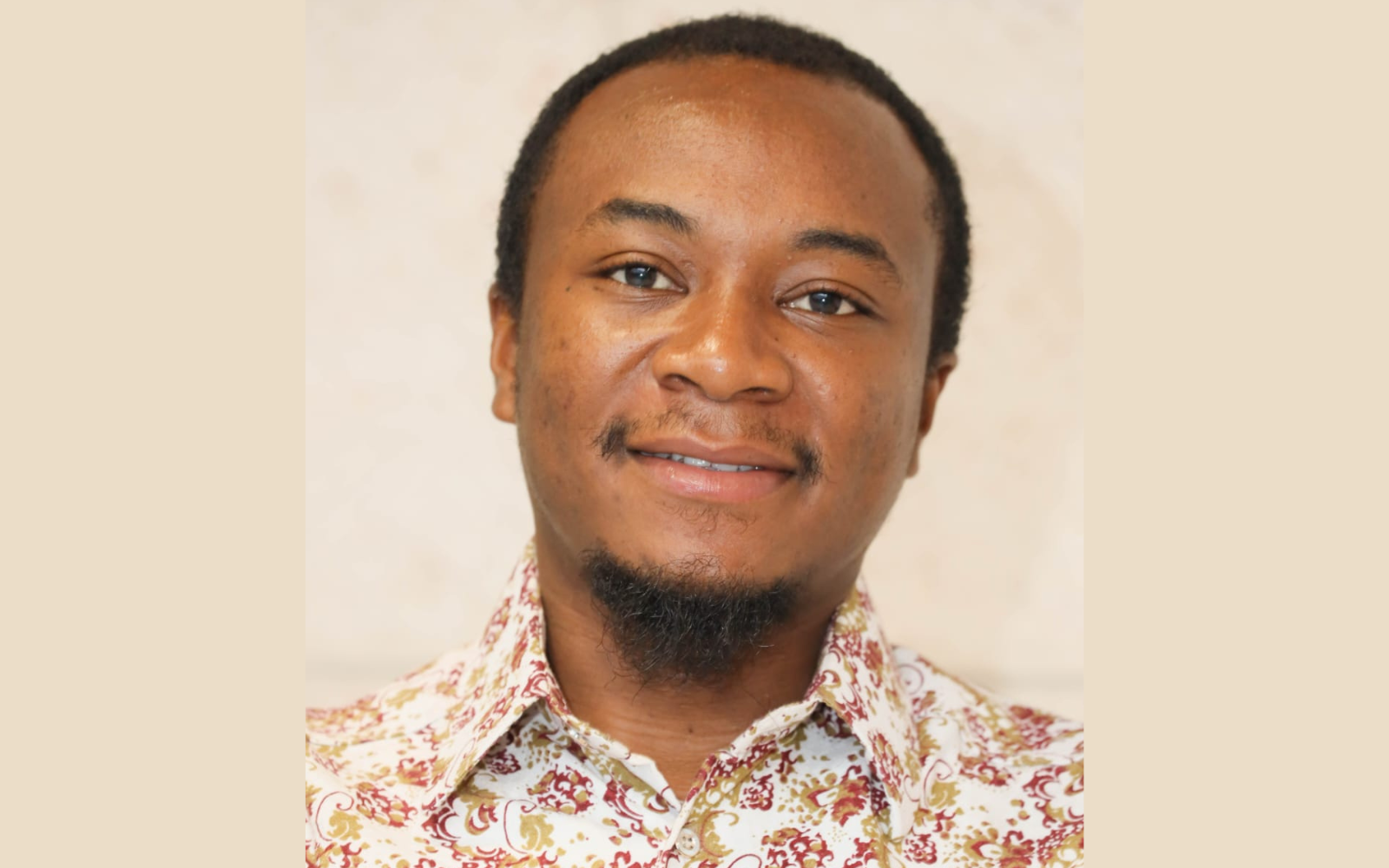
Dr. Sangwe Clovis Nchinjoh takes a boat to work. The ride to Manoka Island isn’t optional. it’s the only way to reach the 20,000 fishermen and families who live there, on land that floods twice every single day
When Sangwe first arrived, he found something shocking.More than 91 out of every 100 children under age two had never received a single vaccine. Not one shot. Not one dose. These children were invisible to the health system.
Cameroon already struggles with unvaccinated children. The country ranks among the top 15 nations worldwide with the most zero-dose children. But Manoka was ten times worse than the rest of Cameroon. In 2019, only 15 out of every 100 children had received even basic vaccines.
Most global health experts might frame the problem as straightforward: communities lack information about vaccines, or they are hesitant. The typical response seems obvious: send teams to raise awareness, deliver vaccines, and move on.
Sangwe asked better questions. He watched the fishermen work. He saw mothers smoking fish on the beach. He learned how families navigate daily life in a setting where malaria is a constant risk and clean water must be transported in by boat.What he discovered changed everything.
“In reality, everyone really wants to be taken care of, and everyone wants good health,” Sangwe explains in a recent interview. “But if you find yourself in a setting where you don’t have access to health services, you need to design a coping mechanism. That becomes either a relative who will help you conduct that delivery or a traditional attendant, or you use a herbalist for your fever.”
The families on Manoka were not ignorant. They knew what vaccines were. They wanted them. But they could not trust a health system that was never there. Vaccination teams came maybe twice a year. They gave shots and left. Meanwhile, the herbalists and traditional birth attendants stayed. They were always present. They helped when children got sick. They delivered babies. They earned trust by being there.
So Sangwe did something different. Instead of fighting against the herbalists and traditional midwives, he brought them into the system. He created a community healthcare model that worked with what already existed in the community.
The community chose their own health workers. Sangwe trained them. These workers did not give vaccines themselves. They treated diarrhoea cases with local oral dehydration solutions and referred severe malaria cases in a timely manner. They taught families about health. They checked if children were vaccinated. They arranged for vaccine teams to visit. Vaccination became part of complete healthcare instead of something separate and foreign.
The results speak clearly. Between November 2021 and August 2022, the program found over 550 children under five who needed care. They reached 187 pregnant women. About 81 out of every 100 pregnant women got essential care. Most powerful is this. They vaccinated 617 children who had missed their shots. That represents 64 out of every 100 children identified.
Vaccine acceptance went from zero to 64 percent in one year.Coverage jumped from 15 percent to 70 percent. This happened through trust, not force.
Through his work with Clinton Health Access Initiative in Cameroon and the leadership of the Cameroon EPI, the approach was piloted across all ten regions of Cameroon. More than8,500 zero-dose children in 20 different areas got their vaccines.
In June 2023, the Sabin Vaccine Institute gave Sangwe a Rising Star Award. What matters more is what his work proves about how global health should work.
Sangwe started an organization called Rural Doctors in 2018. It has now reached nearly 8,000 people in more than 20 remote communities. The organisation now operates a community health research hub that generates community‑based evidence and supports the scaling of effective, locally driven solutions; work that truly matters.
“We realized there is so much need in terms of how we interpret, how we conduct research at a community level,” Sangwe says. “We want the research hub to build the capacity of young people on how to go about this kind of research and also to actively participate in generating this kind of interesting evidence.”
This is what real change looks like. Sangwe worked with communities to find solutions together. He trained workers that communities chose. He treated traditional healing knowledge as valuable. He asked the right questions. Whose knowledge counts? Who decides methods? Who has power? For whom, by whom, with whom?
The lessons from Manoka did not stay on the island. The community‑anchored model informed broader efforts across Cameroon, shaping how teams identified and reached zero‑dose children at scale. These same principles later guided Sangwe’s contributions to similar initiatives in Nigeria as the Manager, vaccines programme, at the Clinton Health Access Initiative. Now Sangwe, is a senior programme manager, vaccines programme at Gavi, the Vaccine Alliance in Switzerland, where he supports programme design, the introduction and scaling of vaccines in LMIC across adolescent and adult populations, including HPV, RSV vaccines, amongst others… What made his work powerful was simple. He was there. He took the boats. He earned trust. People called him “the rural doctor” because he stayed. He listened. He respected what communities knew.Sangwe proved something vital. The barriers we think are about knowledge are really about power. The gaps we call ignorance are about who makes decisions. The solutions we import from outside often already exist inside communities.
This is not charity. This is justice. This is global health done differently. Not through grand declarations but through daily work. Not through foreign experts telling people what to do but through communities leading change.
The boats still go to Manoka. The floods still come. But now children get vaccines. Not because outsiders forced change. Because the community trusts a system that respects them and serves their real needs.
A doctor understood something revolutionary. When 91 out of 100 children have no vaccines, the problem is not that families do not care. The problem is that the system does not earn their trust. He had the humility to see this and the commitment to fix it.
This is what it looks like when global health actually works. When power shifts. When communities lead. When the question is not how do we deliver services to people but how do we serve people on their terms.
Sangwe Clovis Nchinjoh shows us a different path. One boat ride at a time. One community at a time. This is global health otherwise.
My bio
Dr Sangwe Clovis Nchinjoh is a public health physician whose work bridges implementation research, health‑system resilience, and life‑course vaccine programme design. His field experience in hard‑to‑reach and fragile settings has shaped national strategies in Cameroon and Nigeria, particularly around identifying and vaccinating zero‑dose children. As the Senior Programme Manager, Vaccine Programmes at Gavi, the Vaccine Alliance, he supports programme design and vaccine introductions and scale‑up for adolescent and adult populations in LMICs, applying evidence‑driven, context‑specific approaches to strengthen immunisation and primary healthcare platforms. He is also a doctoral researcher examining health‑system resilience in sub‑Saharan Africa.