



Across much of Africa, anesthesia remains one of the most under-resourced and underrepresented specialties in global health. The World Federation of Societies of Anesthesiologists (WFSA) Global Workforce Surveys highlight the scale of the gap. The 2017 survey estimated an average of 1.36 physician anesthesia providers (PAPs) per 100,000 population across the African region, far below the recommended minimum of five per 100,000 required for safe care. In Cameroon, the ratio was even lower, representing just 0.10 PAPs per 100,000, roughly one anesthesiologist for every million people. The 2025 update reported regional averages of 0.6 PAPs and 1.4 non-physician anesthesia providers (NPAPs) per 100,000, confirming that despite expanded training pipelines, workforce density remains critically inadequate. This shortfall determines who receives safe surgery, when, and at what risk, and stands as a structural barrier to universal health coverage identified by the Lancet Commission on Global Surgery.
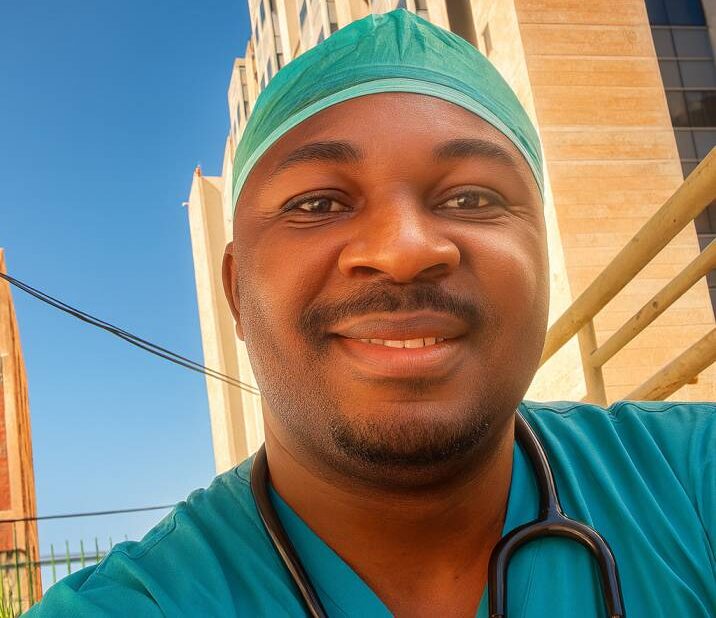
As an anesthesiologist and public-health professional working in Cameroon, I have lived both the challenge and the contradiction. During my training in Israel and later while participating in the ASA Global Scholars Program in the United States, I saw what well-resourced anesthesia systems could achieve. Drugs such as Sugammadex, which reverses neuromuscular blockade within minutes, were routinely stocked in abundance. In contrast, in my current practice, our team once performed an emergency laparotomy for a trauma patient and could not immediately extubate because the reversal agent was out of stock, a supply-chain interruption compounded by the absence of a quantitative neuromuscular monitor. The delay in safe recovery exposed the fragility of our system and crystallized a truth I carry with me about how health equity is not only about access to care, but about access to quality and safety.
This duality has shaped how I understand global health inequity, not as an abstract disparity but as a systemic failure of our health system. Anesthesia is not merely a technical service; it is a critical determinant of surgical and perioperative safety. Yet, workforce development, supply-chain reliability, and investment in equipment and quality improvement still lag behind surgical expansion. To close this gap, access to drugs, equipment, and trained personnel must be treated as integral to surgical infrastructure, not as an optional extension of it.
Too often, anesthesia providers from low- and middle-income countries are excluded from policy tables, a systemic omission that directly contributes to the persistence of unacceptably high perioperative mortality rates in their regions. This exclusion perpetuates profound inequities and deprives global health of the local expertise needed to design effective, context-specific interventions. As reports on institutional power dynamics, such as the Global Health 50/50 analysis, repeatedly highlight, this reflects whose voices, and whose lives are truly prioritized in global governance.
During the ASA Global Scholars Program, I was reminded that excellence in anesthesia is not defined by resources alone but by systems that prioritize safety, mentorship, and continuous learning. The simulation labs, patient pathways, and multidisciplinary quality-improvement initiatives I observed reflected principles that are universally applicable, even in resource-limited environments. Applying them requires humility and adaptation, acknowledging that the pace, pressures, and infrastructure in LMICs demand context-driven solutions that balance aspiration with feasibility.
In Cameroon, anesthesia is often practiced under immense pressure with limited and unreliable equipment, intermittent oxygen, and an overstretched workforce, but also with remarkable creativity. These constraints have fostered context-driven innovations such as simplified clinical protocols, nurse-anesthetist empowerment, and task-sharing models that extend coverage safely. My own work on continuing professional development (CPD) for nurse anesthetists has reinforced that education and mentorship are not luxuries; they are the foundation of patient safety. Building sustainable anesthesia systems requires investing in people as much as in equipment.
Global health must evolve beyond the donor and recipient binary toward a model of mutual expertise exchange. The lessons learned from optimizing anesthesia delivery in Yaoundé or Bamenda are as valuable as the technological advances developed in Boston or Jerusalem. The future of global health depends on recognizing that innovation flows in all directions and that frontline clinicians in resource-limited settings are not merely implementers but active producers of knowledge that can reshape the field.
The future of anesthesia equity depends on policymakers integrating perioperative and anesthesia care into national health plans, international institutions amplifying LMIC leadership, and educators in high-income countries learning from the ingenuity that thrives under constraint.
We say in my village “One hair cannot braid a rope”
Therefore, achieving safe, equitable anesthesia worldwide will require many hands working together, including clinicians, academics, charitable foundations, policymakers, and advocates with shared purpose and respect for diverse expertise.
Author Contact Information
Fung Holgar Mua, MD, MPH, DESAIC
Anesthesiologist & Intensivist, Centre des Urgences de Yaoundé (CURY), Cameroon
Country Director, Carna Health Cameroon
Email: muaholg@gmail.com | Phone: +237-679611279
References
- Kempthorne P, Morriss WW, Mellin-Olsen J, Gore-Booth J. The WFSA Global Anesthesia Workforce Survey. Anesth Analg. 2017 Sep;125(3):981-990. doi: 10.1213/ANE.0000000000002258. PMID: 28753173.
- Law TJ, Lipnick MS, Morriss W, Gelb AW, Mellin-Olsen J, Filipescu D, Rowles J, Rod P, Khan F, Yazbeck P, Zoumenou E, Ibarra P, Ranatunga K, Bulamba F; Collaborators. The Global Anesthesia Workforce Survey: Updates and Trends in the Anesthesia Workforce. Anesth Analg. 2024 Jul 1;139(1):15-24. doi: 10.1213/ANE.0000000000006836. Epub 2024 Mar 12. PMID: 38470828.
- Meara JG, Leather AJM, Hagander L, et al. Global Surgery 2030: evidence and solutions for achieving health, welfare, and economic development. Lancet. 2015;386(9993):569-624. doi:10.1016/S0140-6736(15)60160-X
- Global Health 50/50. Gaining ground? Analysis of the gender-related policies and practices of 201 global organisations active in health. Cambridge, UK: Global Health 50/50; 2024. Available from: https://global5050.org/2024-report/
Editor’s Bio:
Tobi Abiodun edits Global Health Otherwise, a platform dedicated to decolonizing global health narratives and challenging conventional power structures. He curates critical analyses examining whose knowledge counts, how impact is defined, and how to make equity real in research and practice. Through interviews with leading scholars and direct conversations with researchers about their published work, Tobi amplifies African and Global South scholarship while critically examining power dynamics in health systems, diplomacy, and methodology. His editorial work centers Global Health Otherwise’s mission: dismantling outdated hierarchies and making equity a daily practice rather than an aspirational goal in global health discourse and implementation.